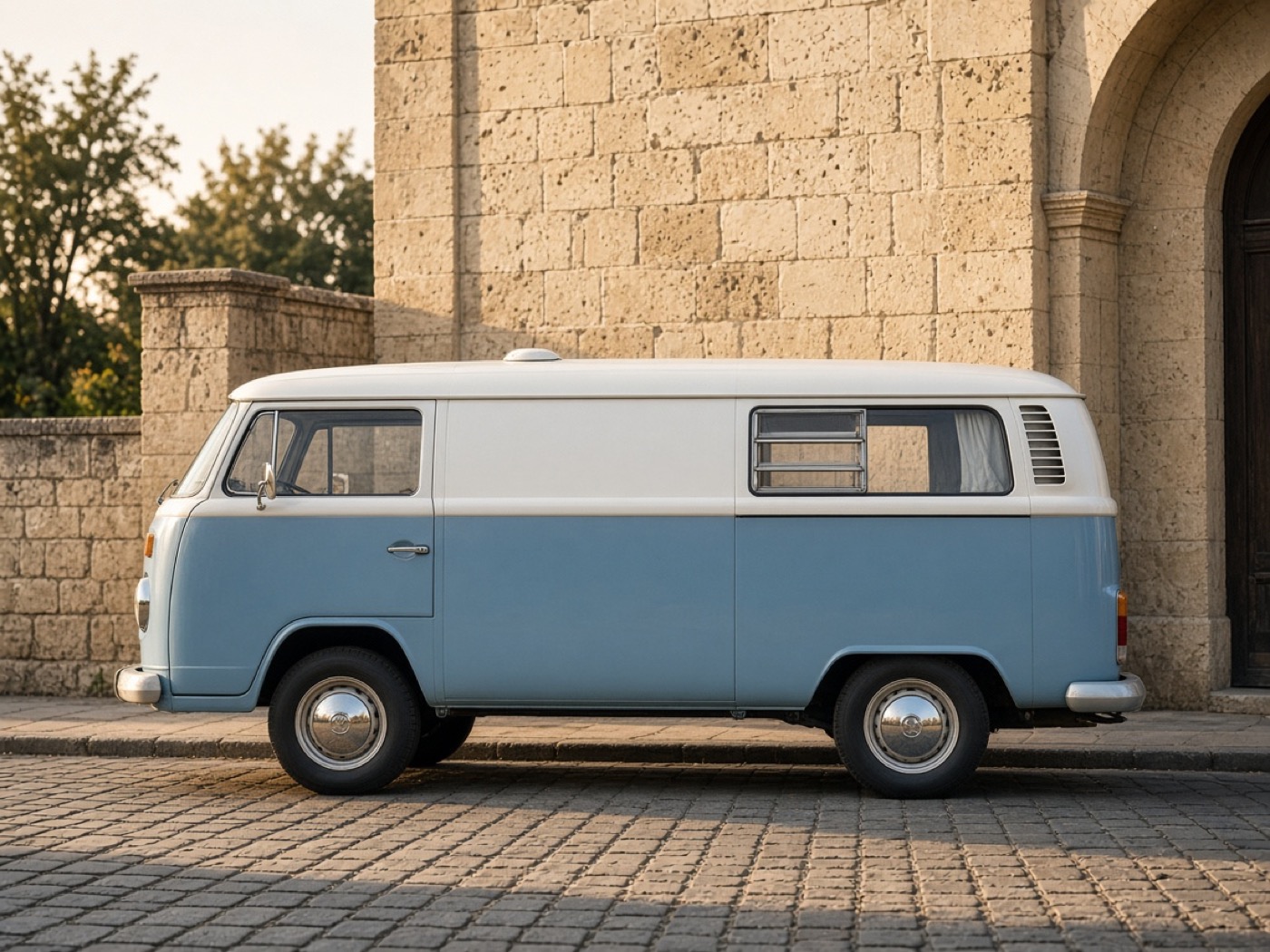
The question comes up at every Volkswagen T1 gathering. The answers shift with the year, the model, and each person’s own experience. This is our view.
Why would there be a difference?
We are talking about the Volkswagen Type 2 T1, not the T2, which did receive several adaptations in Brazil. The Volkswagen plant at São Bernardo do Campo, near São Paulo, stayed under German management throughout T1 production. Combis were assembled there from 1953, and built until 1975.
The first Combis built in Brazil were put together with parts imported from Germany. Production was then localised from the late 1950s. Today, most of the Combi parts on the market are made in Brazil. German Combis, and those from the United States, are usually restored with these Brazilian parts.
Where does the quality debate come from?
It comes mainly from how the T1 was used. In most cases the Brazilian Combi was a working vehicle. It served on farms across the country and carried every kind of load, sometimes livestock. Volkswagen do Brasil advertising of the time even showed calves on board.
These cars were affordable and popular, and many were later left at the back of a farm or a garden.
That is why a Combi imported from Brazil without a serious inspection or restoration still shows that past: rust, a perforated floor, corroded crossmembers, doors out of line. The idea that they are of lesser quality comes from those cars. There are too many points to check to do without people who know them.
Why trust us?
At GS do Brasil we stay present in Brazil, so we can check the T1 Combis we import. Most of them go through a restoration of six to ten months, depending on the starting car and the project. For the others, the structure check decides the purchase. We then overhaul, restore, or replace the mechanical and electrical parts with new ones.
A Combi has to leave in sound condition. In Europe, a repair or a restoration is very expensive, and sometimes impossible, depending on the fault.
With nearly ten years of experience, as of 2023, restoring and importing Brazilian Combis, we follow the process from one end to the other. The aim is a turnkey T1, with after-sale support and a warranty of up to twelve months.
Thank you for reading, and safe travels.